
The Trump Administration Won’t Acknowledge Native Alaskans. We Must.
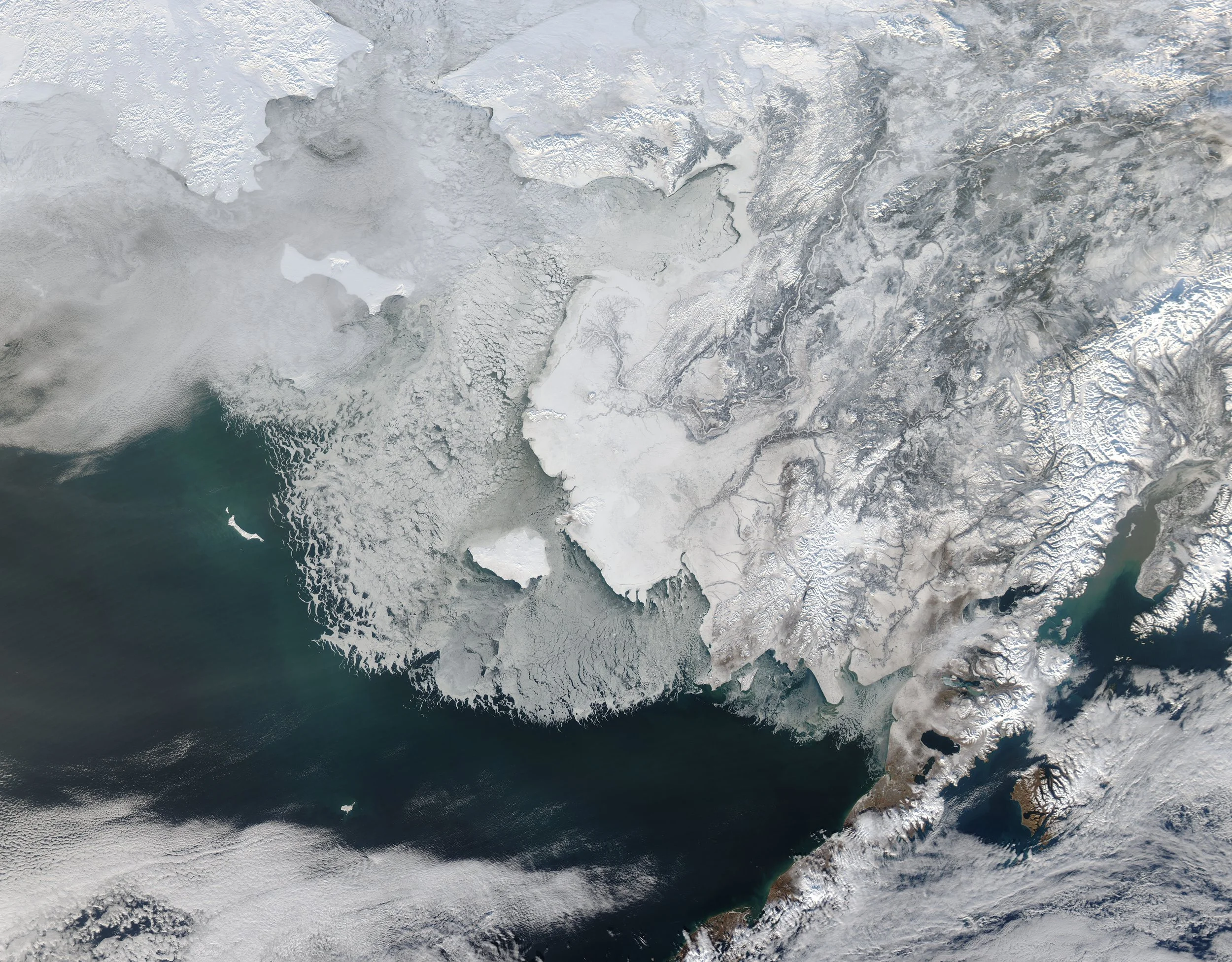
Sea ice off western Alaska | NASA
Since October 11th, Typhoon Halong’s aftereffects for 14 Alaskan communities have displaced thousands of native residents. These losses include both physical losses of shelter and the loss of historic ways of life, as tribal administrator in Kipnuk Buddy Carl explained to NPR.
Some individuals cite not wanting to leave their communities, like Darrel John, a Kwigillingok resident who chose to stay back and help solve post-typhoon problems.
Others have stayed behind to try and save supplies of locally sourced and culturally significant subsistence foods, which are foods harvested and consumed for survival rather than trade. Some examples of Alaskan tribal native subsistence foods are beluga, emperor goose, moose, musk ox, salmon, salmonberries, and seal oil. These foods represent connections to the land as well as a commitment to physical survival.
Replacing subsistence harvests requires not only income and asset-loss evaluation, but an understanding of the Indigenous cultural value of traditional food harvests. Displaced Indigenous communities lose essential nutrition alongside a source of comfort and emotional support while dealing with leaving their homes and communities.
President Donald Trump declared Typhoon Halong a federal disaster on October 22nd. This declaration came almost a week after Alaska governor Mike Dunleavy, the Association of Village Council Presidents, and the Alaska Federation of Natives called for a federal disaster declaration.
Despite this, advocates say the administration’s authorization of $25 million for disaster relief is not enough.
The Alaska Native Tribal Health Consortium’s 200-page study found an estimated annual funding gap of $80 million. This money is needed to better protect Indigenous coastal Alaskan communities or give them the opportunity to evacuate from storms that become increasingly threatening with climate change. If climate change continues, protecting Alaskan coastal communities could cost a total of $4.3 billion in just the next 50 years.
Yet, it seems the Trump administration has moved in the opposite direction, denying funding for already vulnerable Alaskan communities.
Weather balloon networks that could have predicted the typhoon had been inactive due to Trump’s funding cuts and did not detect the typhoon until 36 hours after it crossed into Alaska waters, too late for evacuations in most locations, according to a former National Weather Service Meteorologist.
These changes are troubling for the future of Alaska, where global warming has already impacted many native communities.
A National Parks Service report shows that since 2021, climate change has significantly impacted Indigenous Alaskan subsistence agriculture, leading to the destruction of intergenerational knowledge networks. Native communities have been displaced from their historical areas. Shrinking sea ice affects both animal wildlife and Native hunters and a major food source, the salmon run, is declining thanks to environmental change.
As funding cuts and changing environments have and continue to threaten the lives of Native Alaskans, the Trump administration has blown off the COP30 climate summit, deprioritized Arctic research on climate-change in favor of military development, defunded climate-preparedness, and removed over $4 billion worth of support for environmental disaster relief and prevention.
Few non-Alaskan news outlets continuously report the ongoing displacement of Alaskan Natives. Indigenous land stewardship, which refers to sustainable Indigenous-led management of land, the human right to a healthy environment, and growing worries around climate change are all salient - leading many to feel hopeless about humanity’s future.
But we can’t give up on saving the planet, or each other. Overwhelming volunteer responses from Anchorage have kept displaced Native communities fed in culturally appropriate ways thanks to donations of traditional Native foods.
Alaskans of all backgrounds have joined together to aid evacuees and help rebuild the devastated communities, fundraising almost 5 million dollars for both short and long-term recovery from one of the worst natural disasters in Alaska’s recent history.
Support came from outside of Alaska, too: hundreds of American Red Cross disaster relief workers were sent to aid individuals evacuating their homes.
As Northwestern students, we are almost 3,000 miles away from the villages affected by Typhoon Halong. But there are always things we can do to help. One option is, of course, donating to the Western Alaska Relief Fund. However, environmental action demands more than just financial contribution.
Following in the footsteps of volunteer responses to Typhoon Halong, joining actions for Native communities— be it protests, workshops, or volunteer opportunities— is another important aspect of combatting climate change.
Native communities and their expertise on land stewardship is central to combatting climate change and mitigating losses of our natural world. But we need to care about these communities for more than just their knowledge of environmental systems. It doesn’t matter if the health and happiness of Native communities benefits us all— we need to care for and recognize all human beings as deserving of safety and community
I am not a Native person. My experiences with climate change and anthropogenic change amount to being sad that there are fewer bugs and noticing that it doesn’t snow anymore in my hometown of New York City. But I know my privilege is a responsibility to do what I can.
Community action alone will not solve climate change. But it is a source of hope - which is the most valuable thing when we all would like to give up.